
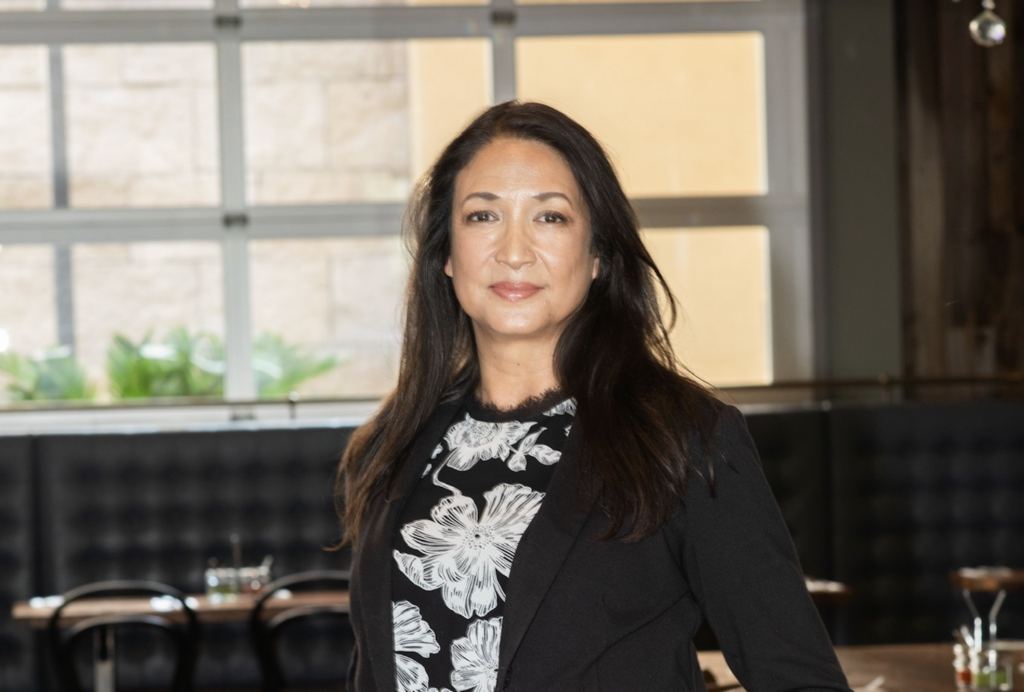
Guest Post from Miyuki One Bear Executive, Admin to our CEO
I almost skipped it. As a C-level Executive Admin in the hospitality industry, supporting a CEO, a VP of Operations, and Leadership teams across seven locations, my calendar is a battlefield. A virtual conference felt like one more item fighting for a slice of an already-overscheduled day. But I showed up… screen on, coffee in hand and by the time the day was over, I had cried, laughed out loud, texted three people about things I’d just learned, and walked into a networking session using an entirely new approach to conversation. The Virtual National Conference for Women gave me more than I expected. Here are the four themes that really resonated with me, and why I think every professional woman needs to hear them.
Even the Most “Successful” People Get Knocked Down
One of the things I struggle with (and I suspect many of us do) is looking around at polished, successful people and wondering why the path feels so much harder for me. The speakers at this conference dismantled that story completely. Speaker after speaker talked openly about rejection, failure, and the moments they almost gave up as a real, recurring part of their lives. This really reframed things for me. These women treat setbacks as data instead of evidence that their insecurities were valid. As Executive Admins, we absorb a lot. We are the connective tissue between what’s planned and what actually happens on any given day across multiple locations. Resilience isn’t optional in this industry. Hearing these speakers normalize the struggle was really helpful.
The Day I Cried at My Laptop and Why That Was Great
I was not expecting to cry during a virtual conference. And yet… Martha Beck’s keynote on managing anxiety in today’s world was unlike anything I’ve experienced in a professional setting. She guided us through a visualization exercise: picture two inner children living inside you. One is wild: free, instinctive, curious, a little chaotic. The other is strict: the one who enforces the rules, maintains the image, keeps everything under tight control. I knew both of those kids immediately. And when Martha asked us to imagine what it would look like to let the strict one finally rest, to tell her that the wild one wasn’t a threat, that everything didn’t have to be controlled, something broke open in me. Tears I didn’t know I was holding.
When you support multiple leaders and dozens of team members, the pressure to hold it all together is constant. The “strict child” inside me has been earning her keep for years. Martha’s work helped me see that a significant portion of my anxiety is self-generated, by an internal enforcer who is exhausted and overdue for a break.
Imposter Syndrome Isn’t Real and Women Have More Confidence Superpowers Than Men
Lisa Sun’s session, “What Is Your Confidence Language,” included a statement that stopped me mid-sip of my coffee: imposter syndrome isn’t a real thing. Before you close the tab, hear me out, because the nuance here is everything. Lisa’s argument isn’t that the feeling isn’t real. It’s that we’ve been labeling a confidence gap as a personal deficiency, when it’s actually a systemic and structural one. Naming it “imposter syndrome” puts the problem on women. The real work is understanding what’s actually driving the gap and then using it as a compass.
Lisa’s research on confidence “superpowers” was equally energizing. Women carry more types of confidence than men but men tend to have the loudest one: the Leader superpower. That’s the one that gets people promoted. And because it’s the most visible form of confidence, it often drowns out every other kind. My own confidence superpowers; Achieving, Knowing, Self-Sustaining, (and to some degree, Leading), gave me a lot to sit with. As an EEA, I live in Achieving and Knowing every single day: anticipating needs, solving problems, keeping things moving. But the Leader superpower? I’ve been wielding it quietly for years without fully claiming it. Lisa’s framework reminded me that supporting great leaders doesn’t mean dimming your own. Once women hone that Leader superpower, we’re actually ahead of the game.
“How to Talk Gooder” and Why I’m Already Using It
Alison Wood Brooks’ session had the most delightfully disarming title of the day and the most immediately actionable content. Her research on conversation covers both professional and personal dynamics, and it landed differently than most communication advice I’ve heard. As someone whose entire role is built on communication, translating between executives and operations teams, between strategy and multiple locations living it out in real time, I thought I had a pretty solid handle on this. Alison’s work showed me the gaps I didn’t know I had.
Most communication training tells you what to say. Alison’s work helped me think about how conversations feel to the other person; the rhythm, the moments where we miss a chance to go deeper because we’re too focused on what we’re about to say next. I applied her tips at a networking event shortly after, and I made more genuine connections than I typically do. I think this was because I was more present. I asked better questions. I followed threads. I made people feel heard. That’s a really important career skill in a role where relationships are everything.
The Thread Running Through All of It
Looking back on the day, what strikes me is how connected all four themes are. Resilience requires releasing the grip of the internal enforcer Martha Beck introduced me to. Confidence requires reframing the story Lisa Sun helped me see more clearly. And every relationship – with executives, operations teams, and colleagues across locations – gets better when we show up the way Alison Wood Brooks described: curious, present, and genuinely interested.
If you’re a professional woman in hospitality, or any industry that asks more of you than it always acknowledges, and you’re wondering whether a day-long virtual women’s leadership conference is worth your time, I get the skepticism. I had it too. But sometimes the most important thing you can do for your career is step away from the logistics, the scheduling, the endless coordination, and spend a few hours remembering who you are and what you’re made of. I’ll be back next year, and I’ll be recommending it to every woman in my network. You can sign up to receive notifications for the next one here Virtual National Conference for Women.